Artificial Grass: The Story, Benefits and Future of Synthetic Lawns

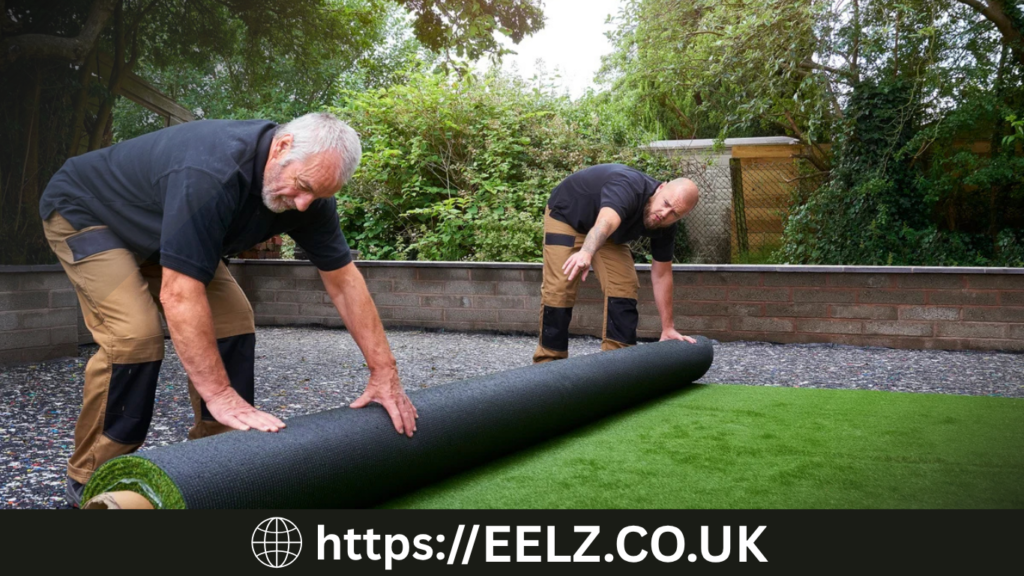
Artificial grass has changed dramatically since its early days as a hard, plastic-looking sports surface. Today, modern artificial grass is used in private gardens, balconies, roof terraces, playgrounds, commercial spaces and sports facilities across the UK.
Its appeal is easy to understand. A well-installed synthetic lawn can remain green throughout the year, cope with heavy foot traffic and remove the need for regular mowing. However, artificial grass is not automatically the most sustainable or suitable choice for every outdoor space. Its environmental impact, drainage requirements and effect on wildlife all deserve careful consideration before installation.
Early Development and Background
Artificial grass was developed in the United States during the 1960s, at a time when researchers were looking for durable playing surfaces for urban children and sports facilities. Early research was linked to concerns that children in densely populated areas had fewer opportunities to exercise outdoors than those living in rural locations.
The Ford Foundation supported research into improving urban recreation, creating interest in a surface that could resemble grass without requiring sunlight, regular watering or fertile soil. Engineers at Monsanto subsequently developed an early synthetic material known as ChemGrass. The first notable installation took place in 1964 at the Moses Brown School in Providence, Rhode Island.
Artificial grass gained wider public attention in 1966 when an early version was installed at the Houston Astrodome, an indoor baseball stadium in Texas. Natural grass struggled in the enclosed arena because of limited sunlight, making synthetic turf an attractive practical solution.
The material was later marketed under the name AstroTurf, which became so widely recognised that many people began using the brand name to describe artificial grass generally. Over time, manufacturers improved the fibres, backing systems and shock-absorbing layers, making synthetic turf more realistic and comfortable than its earliest versions.
Unlike a natural lawn, artificial grass is made from synthetic fibres that are stitched or tufted into a backing. The fibres are usually produced from plastics such as polyethylene or polypropylene. A carefully prepared sub-base is then installed beneath the turf to provide stability, drainage and resistance to movement.
Artificial Grass and Its Rise in Popularity
The original breakthrough for artificial grass came from sport, but residential landscaping eventually became one of its most visible uses. Homeowners began choosing it for gardens that were difficult to maintain, particularly small urban spaces, shaded areas and properties used frequently by children or pets.
Modern products are designed with different pile heights, fibre shapes and shades of green. Some include brown or beige strands to create a less uniform appearance, while others are deliberately short and dense for patios, balconies or areas with heavy use.
The quality of artificial grass varies considerably. Entry-level products may look flatter and show signs of wear more quickly, whereas premium varieties often have thicker fibres, stronger backing and better resistance to ultraviolet light. The most convincing options tend to combine several fibre tones rather than relying on a single bright green colour.
Its appeal is not simply visual. Artificial grass can be used throughout the year without becoming muddy, which makes it attractive to families with young children and dog owners. It can also be useful where natural grass repeatedly fails because of poor soil, excessive shade or intense footfall.
In sports, synthetic surfaces offer a more predictable playing environment and can withstand more use than natural turf. Sport England guidance identifies durability, increased usage, efficient use of space and defined performance characteristics among the potential advantages of artificial pitches.
Even so, artificial grass is not maintenance-free. Leaves, soil and organic debris need to be removed, and the surface may require brushing to keep the fibres upright. Pet owners also need to rinse areas regularly and ensure that odours do not build up.
Benefits of Artificial Grass
The main benefit of artificial grass is consistency. A natural lawn changes with the seasons, weather and level of use. Synthetic turf, by contrast, can maintain a relatively stable appearance in wet or dry conditions.
Other advantages include:
- No routine mowing, reducing the need for a lawnmower, fuel or electricity.
- Less watering during dry periods.
- No bare patches caused by children, pets or regular foot traffic.
- A clean, usable surface in gardens where natural turf becomes waterlogged.
- Suitability for balconies, terraces and compact outdoor areas.
- Reduced need for lawn fertilisers, herbicides and weed treatments.
- A long service life when the product is correctly installed and maintained.
For some households, these benefits can make a meaningful difference. A person with limited mobility may find a synthetic lawn easier to manage than natural grass. Likewise, a busy family may value having an outdoor surface that does not require mowing every week during the growing season.
Artificial grass can also improve the practical use of neglected spaces. A small courtyard that previously became muddy or unattractive in winter may become a more comfortable seating or play area after careful redesign.
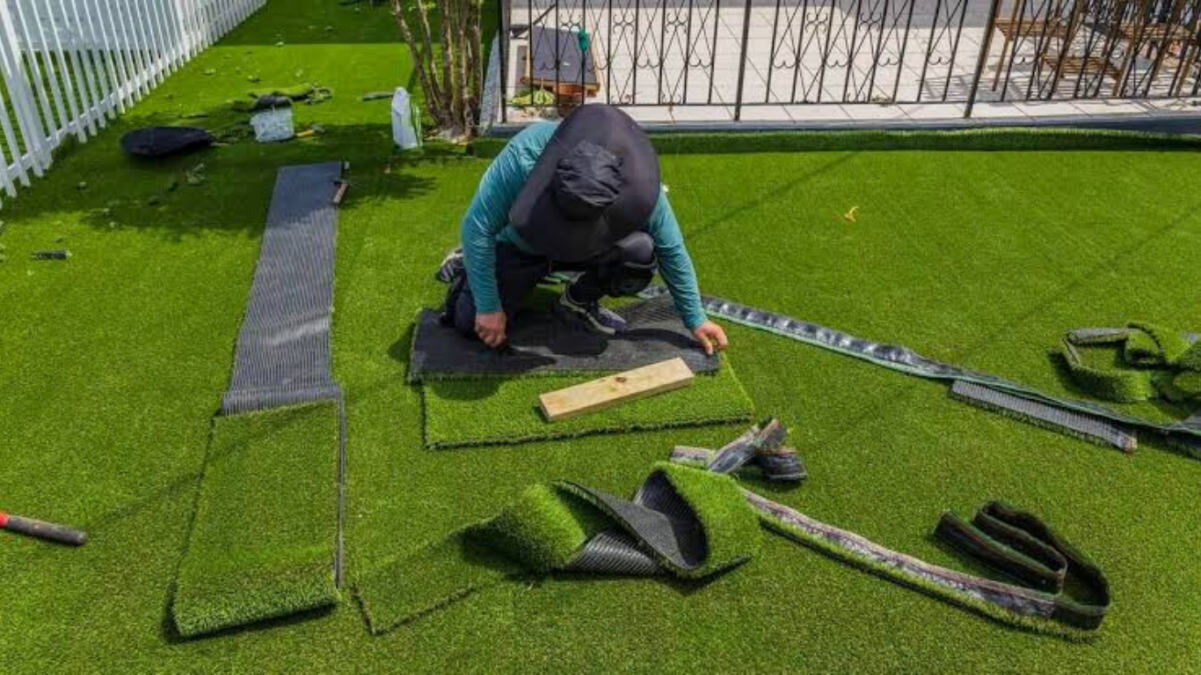
However, the benefits depend heavily on installation quality. Poorly prepared ground can result in ripples, sinking, standing water and visible joins. A reputable installer should explain the sub-base, edging, drainage and expected maintenance rather than focusing only on the appearance of the finished lawn.
Environmental Questions and Turning Points
The environmental debate surrounding artificial grass has become more prominent as its use has increased. Synthetic turf can reduce water consumption and eliminate some routine gardening products, but it is still a plastic-based material that requires energy and resources to manufacture.
Artificial grass also removes living soil and plants from an area. That can reduce opportunities for insects, worms and other small organisms. The Royal Horticultural Society encourages gardeners to provide varied habitats, flowering plants, water sources and natural cover when supporting wildlife in gardens.
End-of-life disposal presents another challenge. Artificial turf is difficult to compost, and mixed materials can make recycling complicated. In England, the Environment Agency has issued specific guidance for storing and treating waste artificial turf, including measures intended to reduce the loss of microplastics during handling.
There are also questions about heat. Like many dark or plastic surfaces, artificial grass can become hot in direct sunlight, particularly during warm weather. This may make it less comfortable for children, pets and people using the garden without shade.
Drainage is another important consideration. Artificial grass itself may allow water through its perforated backing, but the layers beneath it determine how effectively rainfall leaves the surface. If the area is laid over an impermeable base or poorly graded ground, water may collect or run towards neighbouring land.
UK government guidance on front gardens stresses the importance of permeable surfacing, soakaways and rain gardens in reducing rainfall runoff. It states that hard surfacing covering more than 5 square metres may require planning permission where water cannot drain to a permeable area.
Personal and Household Considerations
Although artificial grass is not a person with a private life, its place within the home raises several practical questions. The most important is how the garden will actually be used.
A household with pets should investigate whether the backing is suitable for frequent cleaning and whether the proposed sub-base drains efficiently. Dog owners may also want to ask how the surface will be sanitised and whether separate drainage arrangements are recommended.
Families should consider temperature, cushioning and supervision. Artificial grass can provide a soft-looking play surface, but it is not automatically a substitute for impact-tested playground surfacing. Children may also benefit from a garden that includes planting, soil, logs and other natural features rather than a single uniform covering.
For older people or anyone with mobility difficulties, a level, even surface may be helpful. Yet the transition between paving, borders and turf should be designed carefully to reduce trip hazards.
A garden’s visual character matters too. Artificial grass can look convincing when surrounded by planting, trees and natural materials. Covering an entire garden in synthetic turf may appear stark and can reduce the variety of spaces available for wildlife, food growing and relaxation.
Later Development and Current Uses
Artificial grass continues to evolve. Manufacturers are experimenting with recycled content, improved backing systems, alternative infill materials and designs intended to make recycling easier at the end of a product’s life. Claims about sustainability should nevertheless be examined carefully, as recycled content does not necessarily make a product biodegradable or simple to recycle.
In residential gardens, current uses include small lawns, pet areas, play zones, rooftop spaces and temporary event installations. Commercial venues often use synthetic turf around hospitality areas, offices and retail developments where a consistent appearance is important.
Sports technology is also developing. Modern artificial pitches can be designed for different activities, including football, hockey, tennis and multi-use recreation. Their performance depends on the fibre system, infill, shock pad, drainage and maintenance programme.
The most responsible approach is not to present artificial grass as universally good or bad. Instead, its suitability should be judged against the existing site and the alternatives available. In a heavily shaded garden where natural turf never survives, a carefully designed combination of paving, planting and limited synthetic turf may be more practical than constantly replacing a failing lawn. In a garden capable of supporting a living lawn or wildlife-friendly planting, retaining natural ground may offer greater ecological value.
Quick Facts
| Detail | Information |
| Common Name | Artificial grass |
| Also Known As | Artificial turf, synthetic grass, synthetic turf |
| Early Development | United States, early 1960s |
| First Notable Installation | Moses Brown School, Providence, Rhode Island, 1964 |
| Major Early Public Use | Houston Astrodome, 1966 |
| Main Materials | Synthetic fibres, commonly polyethylene or polypropylene |
| Common Uses | Gardens, balconies, playgrounds, sports pitches and commercial landscaping |
| Maintenance | Brushing, removal of leaves and debris, occasional cleaning and inspection |
| Estimated Net Worth | Not applicable; artificial grass is a manufactured product |
Legacy and Lasting Impact
Artificial grass remains important because it solved a genuine practical problem: how to create a durable green-looking surface where natural turf was difficult to grow or maintain. Its history reflects wider changes in sport, urban design, materials science and domestic landscaping.
Its influence can be seen in stadiums, schools, public recreation spaces and private gardens. For sports organisations, synthetic surfaces can increase the amount of use a facility receives. For homeowners, the attraction lies in convenience, year-round appearance and reduced mowing.
Public opinion, however, has become more nuanced. Artificial grass is no longer viewed simply as a modern improvement over natural lawns. People are increasingly asking how it affects drainage, biodiversity, heat, waste and the character of residential neighbourhoods.
That debate has encouraged a more balanced understanding. The best garden is not necessarily the one with the most perfectly uniform surface. It is the one that meets the user’s needs while working thoughtfully with soil, rainfall, planting and wildlife.
Before choosing artificial grass, homeowners should compare its full life cycle with alternatives such as natural turf, clover lawns, low-mow grass, gravel, paving, raised beds or a small wildflower area. They should also request clear information about product composition, expected lifespan, cleaning, guarantees and disposal.
Conclusion
Artificial grass has travelled from experimental sports technology to a familiar feature of modern gardens. It offers durability, a consistent appearance and practical advantages for spaces where natural grass is difficult to grow or maintain.
At the same time, it is not a completely maintenance-free or consequence-free option. Plastic manufacture, end-of-life disposal, drainage and reduced wildlife habitat all need to be considered. A thoughtful design may use artificial grass selectively rather than replacing every living element of a garden.
Must Read: Kayce Smith Age, Height, Career, Family, Net Worth & Biography