
How to Clean a Yoga Mat: A Practical Guide for Fresh, Hygienic Practice

A yoga mat is more than a piece of equipment. It is the surface where you stretch, balance, sweat and settle into stillness. Over time, that surface collects skin oils, sweat, dust, hair and the occasional outdoor grit. Left unattended, these build-ups can leave the mat smelling musty, feeling sticky or slippery, and harbouring bacteria. Learning how to clean a yoga mat properly keeps it hygienic, preserves its grip and extends its useful life.
Whether you practise at home a few times a week or attend regular studio classes, a simple cleaning routine makes a noticeable difference. The good news is that most mats respond well to gentle, everyday methods using items already found in a typical British kitchen. This guide covers quick daily wipe-downs, deeper monthly cleans, material-specific advice and sensible storage habits, all grounded in practical care rather than complicated rituals.
Why Cleaning Matters
Sweat and oils create a film that reduces traction, especially in poses that demand stable hands or feet. Moisture trapped in the mat’s texture can encourage odour-causing bacteria. Shared mats or those used after walking barefoot outdoors pick up additional dirt. Regular cleaning removes this residue without harsh chemicals that might degrade the surface. Many manufacturers advise against strong detergents, bleach or excessive essential oils precisely because they can strip the non-slip properties or cause cracking over time.
A clean mat simply feels better to practise on. It stays fresher for longer between sessions and reduces the chance of skin irritation for those with sensitive skin.
Know Your Mat Material First
Before reaching for any cleaner, check the care label or the manufacturer’s website. Yoga mats fall into broad categories that influence how much water and which solutions they can handle:
- Closed-cell mats (most PVC, many TPE and some rubber) resist moisture absorption. They suit surface wiping and light sprays.
- Open-cell mats (certain natural rubber or foam styles) absorb more liquid and may need careful rinsing or limited soaking.
- Natural rubber benefits from mild, pH-neutral cleaners and should avoid prolonged sun exposure.
- Cork or microfibre-topped mats often need only light wiping; heavy soaking can damage the surface or backing.
If the instructions are unclear, default to the gentlest approach: a soft cloth, warm water and the smallest amount of mild soap.

Everyday Wipe-Down: The Quick Clean
For regular home use, a light clean after each session or every couple of practices is usually enough. This takes only a few minutes and prevents build-up.
Mix a simple spray in a clean bottle: roughly three or four parts water to one part white vinegar. Optional additions include a few drops of tea tree oil for its mild antimicrobial qualities or a drop of lavender for a fresher scent. Shake well. Alternatively, a few drops of mild washing-up liquid in warm water work well.
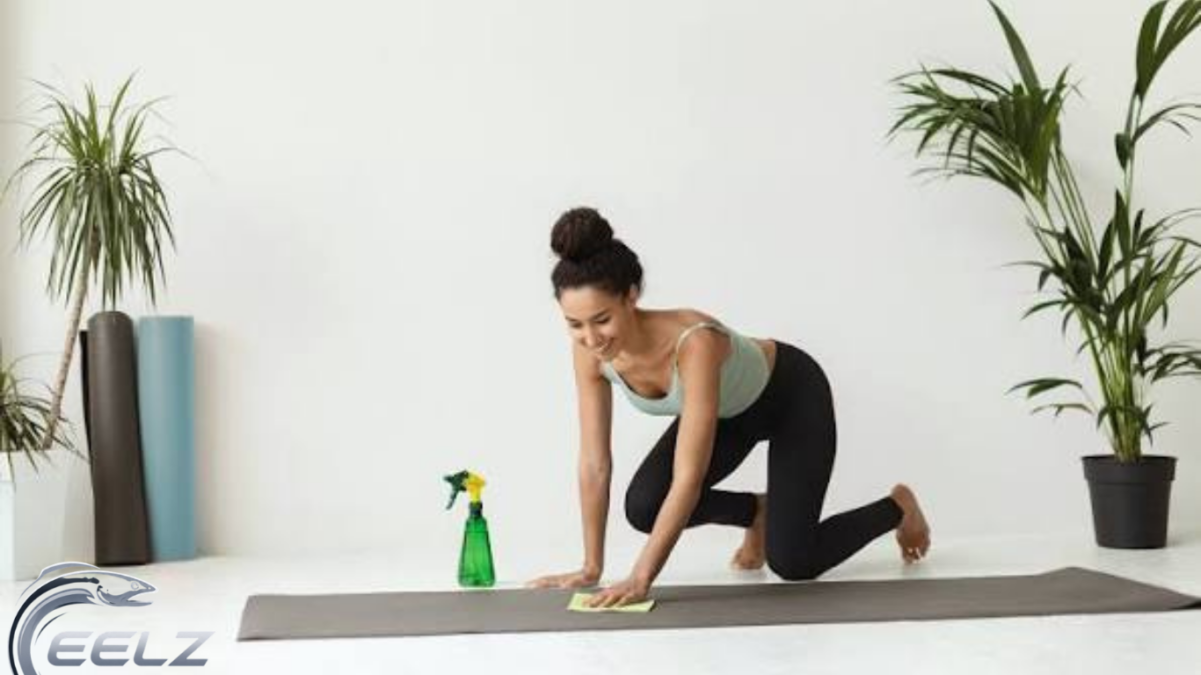
Lay the mat flat. Lightly mist one side or dampen a soft microfibre cloth with the solution. Wipe in gentle circular motions, paying attention to the areas where hands and feet rest most often. Flip the mat and repeat on the reverse. Avoid saturating the material. Wipe away any excess moisture with a dry cloth, then leave the mat to air-dry completely—flat on the floor or draped over a drying rack or shower rail—before rolling it up. Direct heat or strong sunlight can warp or fade some mats, so choose a well-ventilated indoor spot or a shaded outdoor area.
Dedicated yoga mat sprays available in UK shops offer a convenient ready-made option with natural antibacterial ingredients. These are useful for studio bags or when you prefer not to mix your own solution.
How to Deep Clean a Yoga Mat
A more thorough clean every four to six weeks (or more often if you sweat heavily or practise hot yoga) removes deeper residue. Always confirm the method is suitable for your mat.
For most closed-cell mats, prepare a bath or large basin of lukewarm water with a teaspoon or so of mild, plant-based washing-up liquid per few litres. Submerge the mat for five to ten minutes if the care instructions allow, then gently wipe both sides with a soft sponge or cloth. Rinse thoroughly under clean water or with a fresh cloth until no soap remains. Press out excess water with a towel—never wring or twist the mat, as this can distort its shape. Hang or lay flat to dry fully; this can take several hours or overnight depending on thickness and humidity.
If soaking is not recommended, simply wipe the mat thoroughly with the soapy solution, rinse with a clean damp cloth, and dry as above.
Some thinner or specifically designed mats can go in a washing machine on a cold, gentle cycle with minimal detergent and no spin. Hang to drip-dry afterwards. Never tumble-dry a yoga mat.
Special Considerations for Different Mats
Natural rubber mats often prefer water alone or a very dilute vinegar solution for routine care, as stronger soaps can affect the surface. Cork surfaces respond well to a lightly damp cloth; avoid essential oils that might leave residue. Microfibre or suede-style tops on some modern mats may be machine-washable on a cold gentle cycle, but always hang to dry.
Avoid bleach, alcohol-based cleaners in high concentration, abrasive scrubbers and fabric softener. These can leave the mat slippery or cause premature wear. If your mat develops stubborn stains, a paste of mild soap and a little water applied gently with a soft cloth usually lifts them without damage.
Drying and Storage Habits
Complete drying is as important as the cleaning itself. Rolling or storing a damp mat encourages mould and odour. Allow at least thirty minutes to several hours, checking that both sides feel dry to the touch. Store the mat rolled (not folded) in a cool, dry place away from radiators and direct sun. A breathable mat bag helps protect it between sessions without trapping moisture.
Using a thin yoga towel on top of the mat during particularly sweaty practices reduces the amount of residue that reaches the surface and makes post-session clean-up easier. Wash the towel regularly with your normal laundry.
How Often Should You Clean?
Frequency depends on use. A light wipe after most sessions keeps everyday grime at bay. Deep cleaning monthly suits moderate home practice. Increase to fortnightly for hot yoga, outdoor sessions or shared mats. If the mat starts to feel slick, develops a noticeable smell or shows visible marks, clean it sooner. Personal mats used only by one person in a clean home environment need less aggressive disinfection than studio loaners.
Common Mistakes to Avoid
Over-soaping leaves residue that attracts dirt and reduces grip. Excessive essential oils can make the surface slippery. Machine-washing mats not designed for it risks damage. Storing while damp is the quickest route to mustiness. Ignoring the manufacturer’s guidance can void warranties on higher-end mats.
Conclusion
Keeping a yoga mat clean does not require elaborate products or hours of effort. A homemade vinegar spray or mild soapy wipe after practice, a monthly deeper clean when needed, thorough drying and sensible storage form a sustainable habit. The result is a mat that stays grippy, odour-free and pleasant to use for years rather than months.