Herring Under Fur Coat Near Me: The Story of Russia’s Festive Layered Salad


Searching for “herring under fur coat near me” often leads curious food lovers to one of Eastern Europe’s most distinctive and colourful dishes. Known in Russian as seledka pod shuboi or simply shuba (fur coat), this layered salad of salted herring, boiled vegetables and mayonnaise has long held a special place on New Year’s tables across Russia, Ukraine and neighbouring countries. Its striking pink top layer and hearty combination of flavours continue to draw interest far beyond its traditional heartland, whether diners seek it in specialist restaurants, Eastern European delis or homemade versions at home.
The dish’s visual appeal and robust taste make it memorable. For many who grew up with it, herring under a fur coat signals celebration and family gatherings. For newcomers, the first encounter can be surprising yet rewarding once the briny fish meets the sweetness of beetroot and the creaminess of mayonnaise. That enduring curiosity keeps people typing the phrase “herring under fur coat near me” into search bars, hoping to locate an authentic serving close by.
Origins and Background
The precise beginnings of herring under a fur coat remain unclear, though several stories circulate. One popular account places its invention around 1918–1919 in Moscow, when a tavern owner supposedly created a filling salad to calm quarrelsome drinkers and soak up vodka. In this telling the ingredients carried symbolic weight: herring for the working class, potatoes and carrots for the peasantry, beetroot for the red of revolution, and mayonnaise for the bourgeoisie. The name shuba was said to form an acronym for a political slogan against chauvinism and decadence. Culinary historians, however, note that this narrative appears to be a later invention with little contemporary evidence. The salad is absent from major Soviet cookbooks until the later twentieth century.
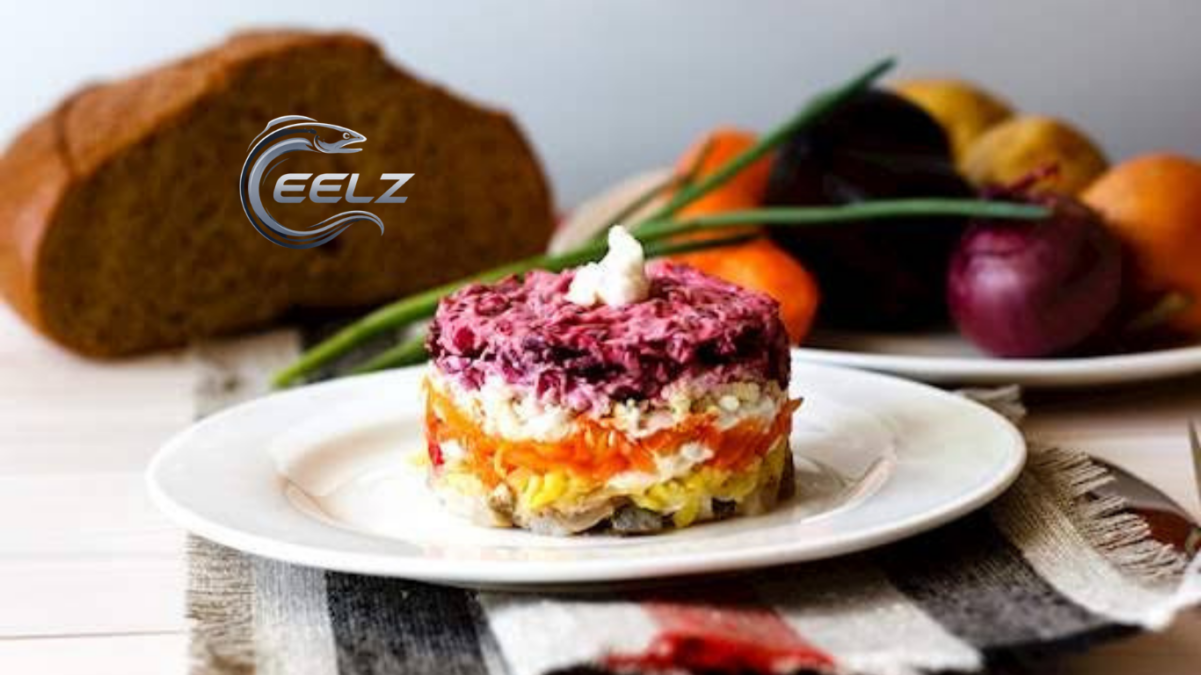
An earlier Swedish layered fish-and-vegetable preparation from the mid-nineteenth century has also been suggested as a distant relative. Whatever its true roots, the dish became firmly established in Soviet kitchens and remains a New Year staple. Families prepare large quantities in advance so the layers can rest overnight and the flavours meld. The “fur coat” refers to the final grated beetroot and mayonnaise topping that blankets the herring beneath.
Traditional ingredients are straightforward: lightly salted herring fillets, boiled potatoes, carrots and beetroots, hard-boiled eggs, onion and plenty of mayonnaise. Some versions add apple for sharpness or dill for freshness. The order of layers can vary slightly by household, yet the herring almost always sits near the bottom and the beetroot crowns the top.
How the Dish Found Its Place
Herring under a fur coat rose to prominence through everyday Soviet and post-Soviet cooking rather than restaurant fame. It appeared at holiday tables, in canteens and later in delicatessens. Its popularity rested on practicality: salted herring kept well, root vegetables were affordable and abundant, and mayonnaise stretched the ingredients into a substantial dish.
In the diaspora the salad travelled with emigrés. Russian, Ukrainian and Baltic communities in Europe, North America and beyond kept the tradition alive. Chefs outside those communities have occasionally reinterpreted it, plating individual portions in ring moulds for a more refined presentation while preserving the classic flavour balance of brine, earthiness and richness.
Public reputation remains affectionate among those familiar with it and sometimes polarising among first-timers. The generous use of mayonnaise and the strong taste of salted herring divide opinion, yet many who try a well-made version become converts. The dish’s bright colour and architectural layers also make it photogenic, helping it appear on social media and modern restaurant menus.
Challenges and Variations
No major scandals or career setbacks attach to a salad, yet practical challenges exist. Finding properly lightly salted herring can be difficult outside specialised shops; overly salty or vinegar-heavy pickled versions alter the balance. Preparing the vegetables takes time, and the salad needs several hours of chilling to set properly. Modern cooks sometimes lighten the mayonnaise or bake rather than boil the beetroot for deeper flavour, adaptations that keep the dish relevant without abandoning its character.
During periods of food scarcity the salad’s filling nature proved useful. In more affluent times it has faced competition from lighter or more fashionable starters, yet it endures because of nostalgia and genuine appetite for its particular combination of tastes.
Finding Herring Under Fur Coat Near Me
For those searching “herring under fur coat near me,” the most reliable sources are Eastern European restaurants, Russian or Ukrainian grocery stores with prepared-food counters, and specialist delis. In larger cities, establishments focusing on Soviet-era or regional cooking often list shuba among their cold starters. Chains and independent spots in Moscow have long been praised for consistent versions, while restaurants such as Kachka in Portland, Oregon, have introduced carefully composed individual servings to new audiences.
Outside major centres, ready-made tubs appear in ethnic markets, especially around New Year and other holidays. Online retailers ship frozen or refrigerated portions in some countries. When local options are scarce, many simply prepare it at home; the ingredients are widely available and the method is straightforward once the vegetables are cooked and cooled.

Quick Facts
| Detail | Information |
| Full Name | Herring under a Fur Coat / Shuba / Seledka pod Shuboi |
| Also Known As | Dressed herring |
| Place of Origin | Russia / Eastern Europe (exact origins debated) |
| Key Ingredients | Salted herring, potato, carrot, beetroot, onion, egg, mayonnaise |
| Typical Occasion | New Year’s Eve and festive tables |
| Serving Style | Cold, layered, often made a day ahead |
| Known For | Colourful layers, hearty texture, holiday tradition |
Lasting Appeal
Herring under a fur coat remains important because it represents more than a recipe. It carries memories of family celebrations, resourcefulness in the kitchen and the pleasures of shared food. Its influence appears in the way later generations continue to prepare it, sometimes with small personal twists, and in the curiosity it still provokes among diners encountering it for the first time. The dish demonstrates how simple ingredients, carefully layered, can create something greater than the sum of its parts.
Public perception mixes fondness with occasional bewilderment, yet the salad’s staying power is clear. It rewards patience, rewards those willing to look past first impressions, and rewards anyone who seeks out an authentic plate when the craving strikes.
Conclusion
From uncertain early stories to its secure place on festive tables, herring under a fur coat has travelled a long way. Whether you locate a serving by searching “herring under fur coat near me,” order it in a specialist restaurant, or assemble the layers yourself, the combination of briny fish, sweet root vegetables and creamy dressing offers a distinctive taste of Eastern European culinary tradition. Its continued presence shows how certain dishes become markers of identity and occasion rather than mere recipes.